
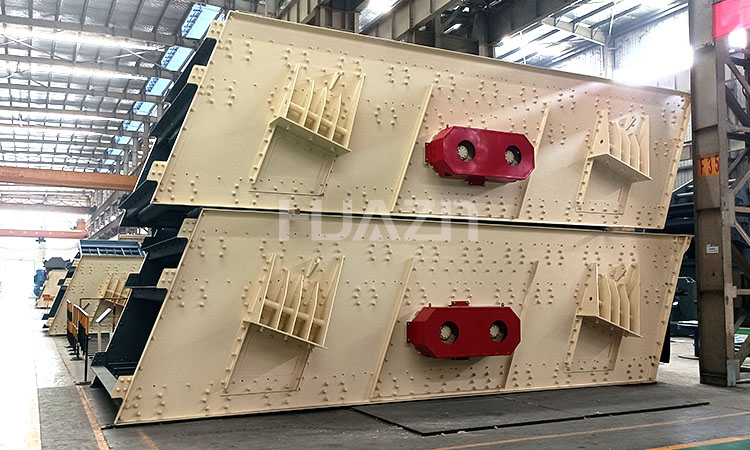
Vibrating screens are widely used in industries such as mining, aggregate processing, and recycling to separate materials by size. Screening efficiency directly affects product quality and production capacity. Improving this efficiency does not always require expensive equipment upgrades—often, it involves optimizing operating parameters and maintenance practices. Below are several practical methods to help you get better results from your vibrating screen.

1. Adjust the Amplitude and Frequency
The vibration amplitude and frequency of vibrating screen determine how vigorously material moves on the screen deck.
Amplitude is the stroke of the vibration. If the amplitude is too small, material may not stratify or transport effectively. If it is too large, particles may bounce excessively and miss the screen openings.
Frequency controls how many times the screen moves per minute.
A balance must be found based on the material type and screen size. In general, coarse materials require larger amplitude, while fine materials perform better with higher frequency.
2. Optimize the Inclination Angle
Most vibrating screens are installed at a slight angle to allow gravity to assist material flow.
A steeper angle increases material speed, which can improve throughput but may reduce screening efficiency because particles have less time to pass through the openings.
A shallower angle slows down the material, giving it more time to pass through the mesh, but may reduce capacity.
Adjusting the angle to match your material characteristics is one of the simplest ways to improve efficiency.

3. Control the Feed Rate and Material Distribution
Feeding material evenly across the full width of the screen is critical.
Overloading the vibrating screen reduces efficiency because material builds up and prevents fine particles from reaching the screen surface.
Uneven feeding causes some areas of the screen to wear out faster and reduces the effective screening area.
Use a proper feed box or chute to ensure uniform distribution. The feed rate should be consistent and within the screen’s rated capacity.
4. Select the Right Screen Media
The screen panel—whether woven wire mesh, polyurethane, or rubber—directly affects performance.
Woven wire mesh offers high open area and is suitable for many applications but wears quickly with abrasive materials.
Polyurethane or rubber panels are more durable and can reduce blinding (when particles clog the openings), especially for wet or sticky materials.
Consider using self-cleaning screen media or tensioned mats for difficult applications. The size and shape of the openings of vibrating screen should match the desired cut point.

5. Manage Moisture Content
Moisture is one of the biggest challenges in screening.
Wet or sticky materials tend to agglomerate and blind the screen openings. If possible, dry the material before screening.
For materials that must be processed wet, use spray bars or choose screen media designed to resist blinding, such as slotted openings or rubber panels with tapered holes.
6. Maintain Proper Tension and Condition of the Screen Deck
Loose or damaged screen panels reduce efficiency and lead to inconsistent product quality.
Check regularly that the vibrating screen media is properly tensioned. Loose screens cannot transmit vibration effectively, leading to poor stratification.
Inspect for wear, tears, or holes that allow oversize material to contaminate the undersize product.
Replace worn sections promptly.

7. Balance the Vibrating Motor or Exciter
For screens driven by vibratory motors or eccentric shafts, the direction and balance of the vibration force matter.
The vibration direction angle (the angle at which the force is applied) influences material travel speed and stratification.
Ensure that both motors and exciters are synchronized and operating with the correct phase angle. Uneven vibration can cause material to move to one side or create dead zones on the screen.
8. Perform Regular Inspections and Maintenance
A well-maintained screen operates more efficiently and lasts longer.
Inspect springs, supports, and the screen box for cracks or fatigue.
Lubricate bearings according to the manufacturer’s recommendations.
Keep the screen clean to prevent buildup of material on cross members or the side sheet, which adds unnecessary weight and can dampen vibration.
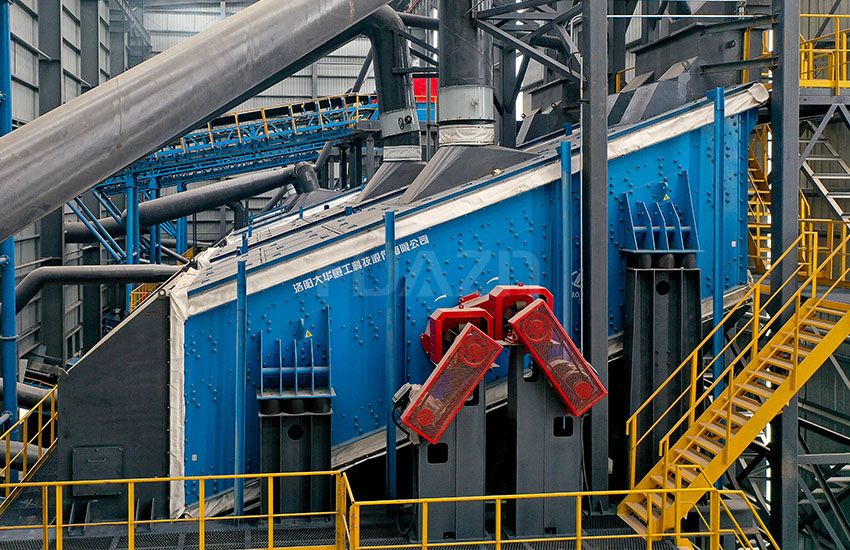
Improving the screening efficiency of a vibrating screen involves a combination of proper setup, careful operation, and consistent maintenance. By adjusting vibration parameters, controlling feed, selecting suitable screen media, and keeping equipment in good condition, you can achieve higher throughput, better product quality, and lower operating costs.
Luoyang Dahua Heavy Industry is a high-tech enterprise with research & development production, sales, and service. Our company not only guarantees the products quality, but also provides perfect after-sales service. Luoyang Dahua has a professional R & D team, a strong after-sales team, from the equipment selection, site inspection, equipment manufacturing, installation, commissioning, delivery and other aspects for your service.