
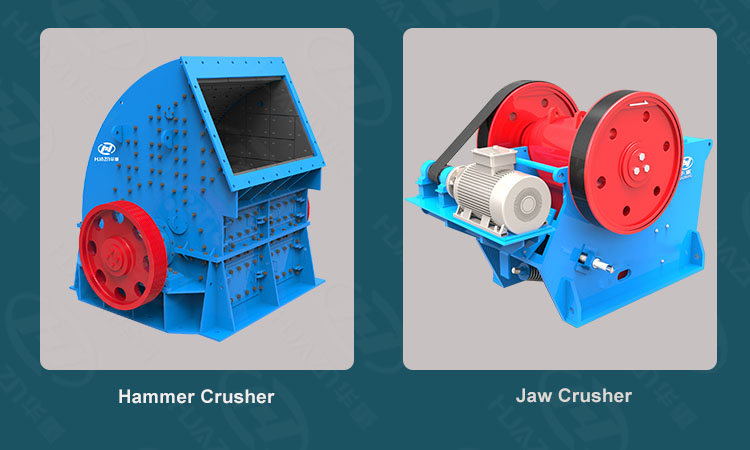
Crushers, as the main equipment for ore production, are widely used in fields such as infrastructure, cement, chemical engineering, and metallurgy. With the continuous development of technology, there are currently more than ten types of models. Among them, hammer crushers and jaw crushers are both commonly used equipment. However, what are the differences between the two crushers?

Which is better, a hammer crusher or a jaw crusher? In fact, each has its own advantages and disadvantages. It depends on which one can meet your needs. In this text, Luoyang Dahua sales manager will give you a specific introduction from their external appearance to internal structure design, as well as the applicable materials, feed particle size, output particle size, working principle, output adjustment method, and production line configuration, etc.
| Crusher | Hammer Crusher | Jaw Crusher |
| Feed Size (mm) | ≤1500 | ≤1300 |
| Discharge Size (mm) | 10 – 60 | 40 – 300 |
| Production Capacity (t/h) | 250 – 2000 | 50 – 2000 |
| Power (Kw) | 160×2 – 630×2 | 75 – 400 |
Working Principle
The hammer crusher mainly breaks materials by the impact of the hammer heads. Meanwhile, the materials are fed into the machine from the upper feeding port and are crushed, sheared, and ground by the high-speed rotating hammer. The jaw crusher crushes materials through the squeezing action of the movable jaw and the fixed jaw, and it belongs to the extrusion type.

Processed Material
The hammer crusher is suitable for materials with medium or lower hardness (compressive strength less than 200MPa), such as limestone, and coal gangue. The jaw crusher is suitable for various materials with compressive strength not exceeding 320 mpa, such as river pebbles, granite, and basalt, etc.
Discharge Adjustment
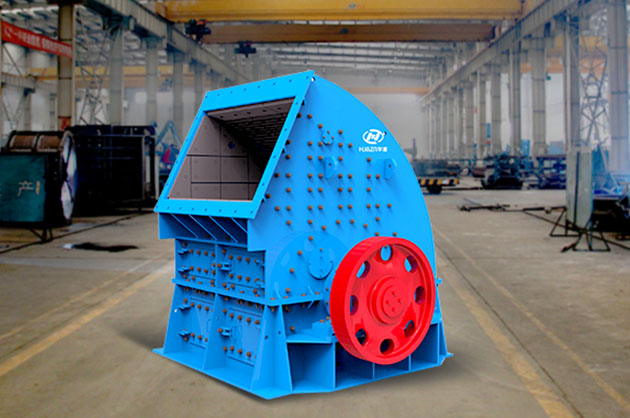
The hammer crusher mainly controls the output particle size by replacing the bottom screen plate or adjusting the length of the hammer head. The jaw crusher adjusts the discharge opening by adding or removing the shims.
Production Line Configuration
The hammer crusher can independently complete medium and fine crushing without secondary processing. Jaw crushers are often used in the coarse crushing stage and need to be operated in conjunction with impact crushers.
Maintenance cost
The hammer heads of hammer crushers wear out quickly and the replacement cost is relatively high. The service life of the vulnerable parts (jaw plates) of the jaw crusher is slightly longer, and the maintenance cost is relatively low.
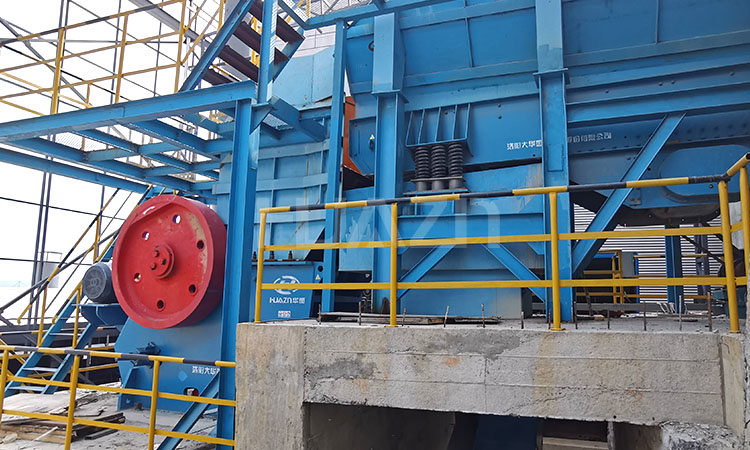
Luoyang Dahua Heavy Industry is a high-tech enterprise with research & development production, sales, and service. The mobile crushing station has been successfully applied in domestic and foreign mine crushing projects. The company has a professional R & D team, a strong after-sales team, from the equipment selection, site inspection, equipment manufacturing, installation, commissioning, delivery and other aspects for your service.