
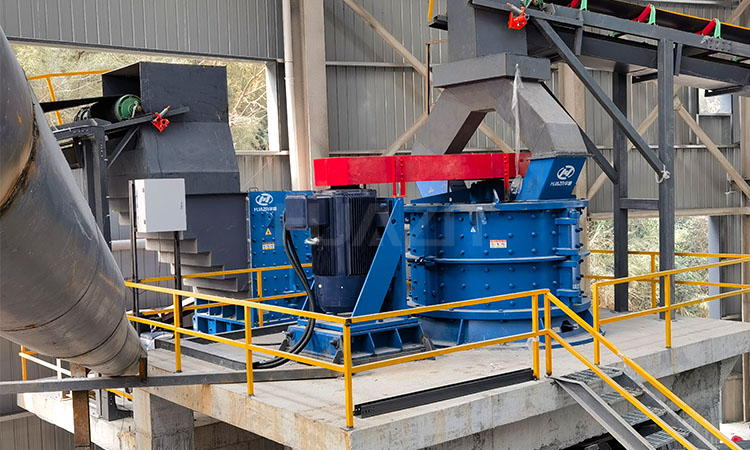
The compound crusher is a highly efficient crushing equipment designed for medium and fine crushing of various materials. It integrates the advantages of multiple crusher types, making it widely applicable in industries such as mining, building materials, and metallurgy. This article provides a detailed analysis of its working principle, structural features, advantages, weaknesses, applications, and price factors.
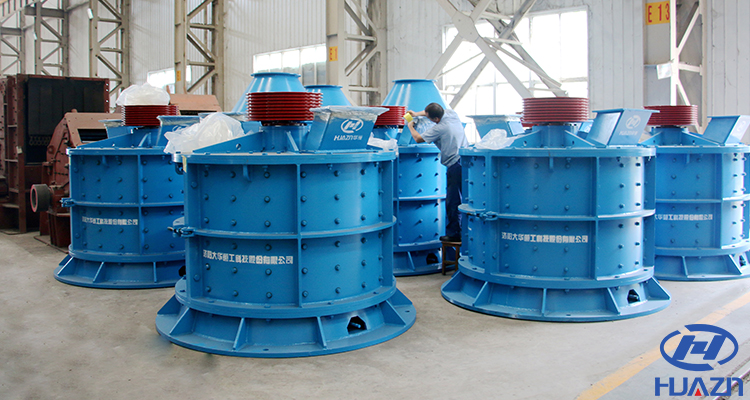
Working Principle
The compound crusher operates on the principle of combined impact and extrusion crushing. Materials enter the crushing chamber from the top feed opening and are immediately struck by a high-speed rotating hammer head. The initial impact breaks larger particles, which are then flung against the liner plate for secondary crushing. Under the dual action of centrifugal force and gravity, materials repeatedly collide and extrude between the hammer head, liner plate, and sieve plate until they reach the desired particle size and are discharged from the bottom.
Structural Features
Integrated Design: The crusher combines a hammer crusher and a impact crusher into a single unit, reducing equipment footprint and simplifying the production line layout.
Durable Components: Key parts such as the hammer head, liner plate, and sieve plate are made of high-chromium alloy or manganese steel, offering excellent wear resistance and impact toughness.
Adjustable Discharge Size: The gap between the hammer head and sieve plate can be adjusted to control the output particle size, enhancing flexibility for different requirements.
Compact and Sturdy Frame: The welded steel frame ensures structural stability and durability under heavy loads and vibrations.

Advantages
High Crushing Efficiency: The combination of impact and extrusion enables efficient crushing of hard and brittle materials, with a high reduction ratio and uniform product size.
Low Energy Consumption: Compared to traditional jaw or cone crushers, the compound crusher consumes less power per ton of material processed, reducing operational costs.
Versatility: Suitable for crushing a wide range of materials, including limestone, clinker, coal, gypsum, and ore.
Simple Maintenance: The modular design allows easy access to internal components, minimizing downtime for repairs and part replacements.
Weaknesses
Limited to Medium-Hard Materials: While effective for many materials, it is less suitable for extremely hard or abrasive substances like granite or quartzite, which can accelerate wear.
Noise and Dust Generation: The high-speed impact process produces significant noise and dust, requiring auxiliary equipment such as dust collectors and noise barriers.
Sieve Plate Clogging: When processing moist or clay-rich materials, the sieve plate may clog, reducing throughput and requiring frequent cleaning.
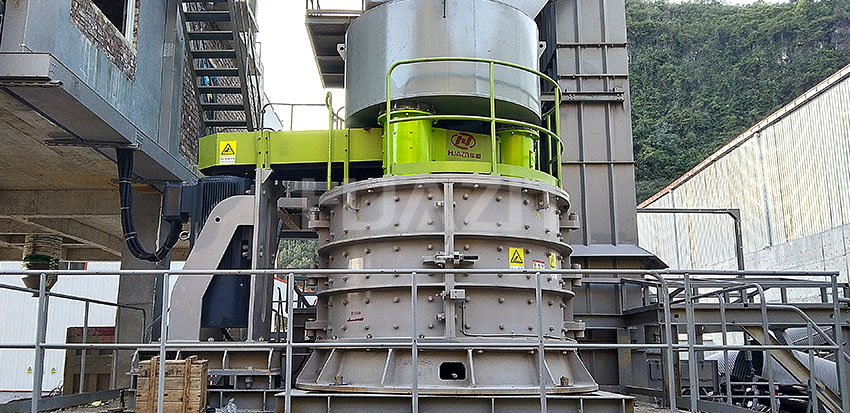
Application Fields
Compound crushers are extensively used in:
Mining and Quarrying: For crushing ores, rocks, and non-metallic minerals.
Cement and Building Materials: To produce aggregates, sand, and raw meal for cement production.
Coal Industry: For crushing coal and coal gangue in power plants and coking plants.
Chemical and Metallurgical Industries: In the processing of fertilizers, refractory materials, and slag.
Price Analysis
The prices of compound crushers vary greatly, ranging from tens of thousands to hundreds of thousands dollars. For the detailed quotation, please contact the Online Service, Luoyang Dahua sales engineers will reply you in 7/24 hours.

Luoyang Dahua Heavy Industry is a high-tech enterprise with research & development production, sales, and service. The mobile crushing station has been successfully applied in domestic and foreign mine crushing projects. The company has a professional R & D team, a strong after-sales team, from the equipment selection, site inspection, equipment manufacturing, installation, commissioning, delivery and other aspects for your service.