
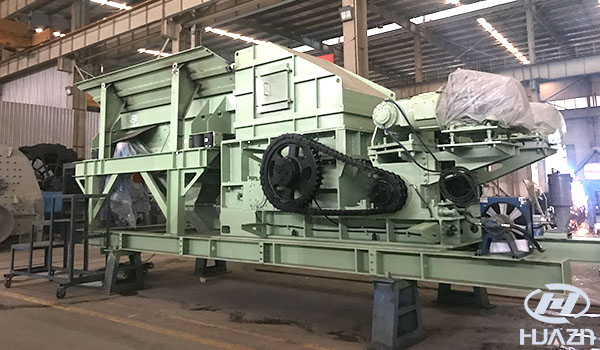
With rapid urbanization and infrastructure development worldwide, construction and demolition waste has become a significant environmental challenge. Repurposing this waste into usable materials like sand not only reduces landfill pressure but also conserves natural resources. Processing construction waste into high-quality sand requires a systematic approach and specialized equipment. Here’s an overview of the essential machinery needed for an effective construction waste-to-sand operation.

1. Feeding System
The process begins with a regulated feeding system. A vibrating feeder ensures consistent and controlled delivery of raw construction waste (concrete, bricks, tiles, etc.) to subsequent crushing stages. This prevents overloading and optimizes workflow.
2. Crushing Equipment
Crushing is the core stage where large debris is broken down into smaller particles.
Jaw Crusher: Jaw crusher is used for primary crushing, it handles large chunks of concrete and rubble, reducing them to manageable sizes (typically 100-200 mm).
Impact Crusher or Cone Crusher: For secondary crushing. Impact crushers are popular for processing concrete and asphalt, producing aggregates with good cubical shape. Cone crushers offer finer crushing for harder materials.
Vertical Shaft Impact (VSI) Crusher: Often employed for tertiary crushing to shape the particles and produce well-graded sand. It enhances the grain shape and removes weak edges.

3. Screening Equipment
Vibrating screens separate crushed material into different size. Multi-deck screens classify output into coarse aggregates, fine aggregates (sand), and oversize material that may require recrushing.
4. Cleaning and Dewatering Equipment
Construction waste often contains impurities like soil, plaster, or wood fragments.
Sand washer (wheel or spiral type): Cleans the sand by removing dust, clay, and other lightweight contaminants. It also improves the sand’s gradation.
Dehydration screen or dewatering cyclones: Reduce moisture content, producing dryer sand suitable for immediate use or storage.

5. Conveying System
Belt conveyors transport material between different processing stages—from feeding to crushing, screening, and final product stockpiling. They are crucial for automated, continuous operations.
6. Dust Suppression and Control
Processing generates considerable dust. Dust collectors (bag filters) and water spray systems at transfer points are essential to meet environmental standards and ensure worker safety.
7. Control System
An electrical control panel with PLC (Programmable Logic Controller) automates and monitors the entire production line, ensuring efficiency, safety, and consistent product quality.

Transforming construction waste into usable sand requires an integrated system of crushers, screens, washers, and auxiliary equipment. The specific configuration depends on the composition of the input waste and the desired sand specifications. Investing in the right machinery not only promotes sustainable construction but also offers economic benefits by turning waste into a valuable resource. As recycling technologies advance, such processes are becoming more efficient, contributing significantly to the circular economy in the construction sector.
Luoyang Dahua Heavy Industry is a high-tech enterprise with research & development production, sales, and service. The mobile crushing station has been successfully applied in domestic and foreign mine crushing projects. The company has a professional R & D team, a strong after-sales team, from the equipment selection, site inspection, equipment manufacturing, installation, commissioning, delivery and other aspects for your service.