
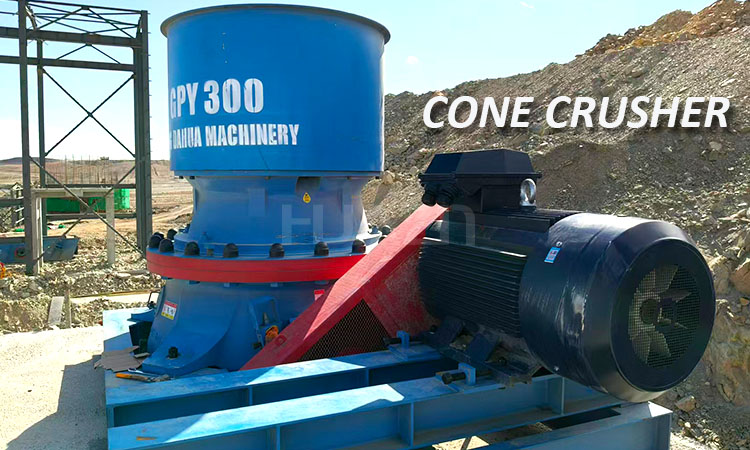
A cone crusher is a key machine in many crushing circuits, valued for its ability to produce a consistent, well-graded product. However, over time, operators may notice two interrelated problems: a drop in production capacity and an increase in product particle size (the discharge size comes out coarser than expected). These issues directly affect downstream processes and final product quality. Understanding why they happen and how to fix them is essential for maintaining efficient operation.

Causes and Solutions
The most common cause of reduced capacity and coarser discharge size is wear of the crushing liners (the mantle and concave). As liners wear, the crushing gap (closed side setting, or CSS) effectively increases, allowing larger particles to pass through without being properly crushed. This reduces the number of crushing events per cycle and lowers throughput.
Solution: Measure the actual CSS regularly using lead balls or a laser measurement tool. Replace worn liners before the CSS exceeds the recommended limit. Also consider changing to a liner profile better suited to your feed and product requirements.
Another frequent cause is an improperly adjusted closed side setting. Even with new liners, if the CSS is set too wide, the product will be coarse and capacity will suffer because the crusher cannot form a proper inter-particle crushing bed.
Solution: Adjust the CSS to the recommended value for your application (typically using hydraulic setting adjustment systems). Make small, incremental adjustments and monitor product size.
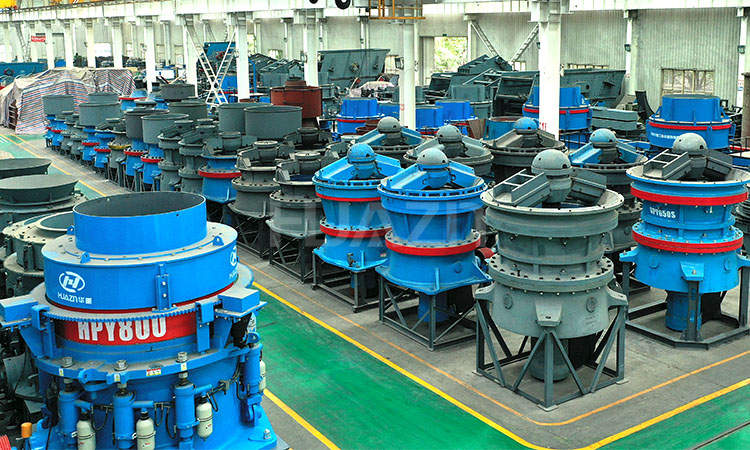
Unsuitable or uneven feed distribution also plays a major role. If the feed is segregated (fines on one side, coarse on the other) or the crushing chamber is not filled evenly, the crusher will operate inefficiently, leading to both low capacity and oversize product.
Solution: Use a proper feed arrangement, such as a surge bin or a distribution plate, to ensure that material is evenly distributed around the chamber. Maintain a “choke-fed” condition (the chamber always full of material) to maximize inter-particle crushing.
Insufficient power or low operating speed can also limit capacity. If the crusher is not drawing enough power, it may be because the feed is too fine, too dry, or lacking in crushable material. Conversely, if the speed is too low for the application, the material may pass through without sufficient reduction.
Solution: Check the current draw against the crusher’s rated amperage. Adjust the feed characteristics (e.g., add more coarse material or moisture) to increase power draw. On variable-speed crushers, increase the eccentric speed within manufacturer limits.
Finally, excessive circulating load (too much material being recirculated from the screen back to the crusher) can fill the crushing chamber with fines, reducing reduction efficiency and causing coarse product to bypass crushing.
Solution: Reduce the circulating load by increasing screen efficiency, adjusting the screen aperture, or modifying the crusher setting.

When a cone crusher shows declining capacity and coarser discharge size, the primary suspects are worn liners, a too-wide CSS, poor feed distribution, low power draw, or excessive circulating load. Operators should first inspect and measure the liners and CSS, then check the feed arrangement and power consumption. Routine monitoring—daily CSS checks, liner wear tracking, and feed analysis—can prevent these problems from developing. By taking prompt corrective action, you can restore crusher performance, maintain product quality, and avoid unnecessary downtime. If you want to know more information, please contact the Online Service or Whatsapp: +86 13938852499.